You've done the research. You've compared cost of living numbers, explored the state line strategy, and maybe even read our honest take on winter versus summer. Now you're asking the question that actually matters for planning your move: when should we do this?
Most relocation guides give you average temperatures and leave it at that. We're going to give you something more useful — a month-by-month breakdown of what life in the Inland Northwest actually feels like from the inside, layered with practical timing advice for the real estate market, school enrollment, job transitions, and getting settled before each season's rhythm kicks in.
Because here's the thing nobody tells you: the month you arrive in Coeur d'Alene shapes your entire first-year experience. Show up in July and you'll wonder why everyone isn't moving here. Show up in January and you'll question every decision you've made. Neither reaction is the full truth, and understanding the seasonal personality of this place will make your transition dramatically smoother.
January and February: The Quiet Test
This is the season that separates residents from tourists.
What Winter Actually Feels Like in CDA
January in CDA averages highs in the low-to-mid 30s and lows in the low 20s. We get snow — real snow, not the slush-and-melt cycle of the Pacific lowlands. Some years bring heavy dumps; other years are surprisingly mild. The lake doesn't freeze (it's too deep and too large), but the surrounding mountains are loaded, and the ski resorts are in full swing.
Here's what January actually feels like day to day: the sun rises around 7:45 AM and sets by 4:30 PM. That's less than nine hours of daylight, and the overcast days make it feel shorter. If you moved from somewhere sunny — Phoenix, Austin, Southern California — this will hit you harder than the cold will. The cold is manageable. The gray takes adjustment.
The Inversion Secret: Go Up to Find the Sun
Here's a tip that saves newcomers every winter: much of the gray is a valley inversion. The clouds sit in the lake basin while the mountains above are bathed in sunshine. If you're stuck in a week of flat gray skies in town, drive up to Schweitzer or Silver Mountain and you'll often pop above the cloud layer into bluebird conditions — bright sun, blue sky, the entire valley below you buried in a cotton-white blanket. It's one of the most stunning things you'll see in the INW, and it's a psychological lifeline. When the gray gets to you, go up. The sun is almost always there waiting.
Why Locals Love Winter Here
But here's what people miss about winter here: the community tightens up. The restaurants aren't packed with tourists. The downtown feels like it belongs to the people who live here. The ski resorts — Schweitzer, Silver Mountain, Lookout Pass — are running strong without the lift lines of Colorado or Utah. If you're a skier or boarder, January and February are when you understand why locals love this place. If you're not into winter sports, this is the season to build your indoor life — find your coffee shop, your gym, your routine.
Moving to CDA in January or February: Real Estate and Logistics
Strategically, this is actually one of the smarter times to arrive. The real estate market is at its quietest. Inventory is lower, but so is competition. Sellers who have listings in January are motivated — their home didn't sell during the peak season, or they've got a reason to move in winter. You'll have more negotiating leverage than at any other time of year. Rental availability is also better because the seasonal workforce has cleared out.
The tradeoff: moving trucks and weather don't always cooperate. If you're driving a loaded trailer over Fourth of July Pass in a snowstorm, you'll want chains and patience. Plan for flexibility in your moving dates.
Mid-Year School Enrollment in North Idaho
Mid-year enrollment is easier than you'd think in the CDA school district. Most schools handle transfer students regularly and the smaller class sizes in North Idaho — compared to where you're likely coming from (Seattle, Portland, Phoenix, the Bay Area) — mean your kids aren't walking into an overcrowded situation.
March and April: The Ugly Beautiful Transition
We're going to be honest with you: March is probably CDA's least photogenic month.
What Spring Looks Like Before It's Pretty
The snow is melting. The trails are muddy. The lake is steel gray and the trees are still bare. It rains, then it snows, then it rains again. The temperatures hover in that annoying 38-to-48-degree range where it's not cold enough to be winter and not warm enough to feel like spring. If you're coming from somewhere that has a clean transition between seasons, this in-between stretch will test your patience.
When the INW Wakes Up
But here's the flip side: this is when the INW starts waking up. By late March, the days are noticeably longer — you're getting 12-plus hours of light. The crocuses come up. The eagles are fishing the Spokane River. And by mid-April, the transformation accelerates fast. The Centennial Trail dries out. The golf courses start opening. The first warm weekend hits — maybe 58 degrees and sunny — and the entire town comes alive like someone flipped a switch.
April is also when the farmers' markets start gearing up, the local breweries roll out spring seasonals, and the mountain biking trails start becoming rideable at lower elevations. It's not peak season by any stretch, but there's an energy to it — the anticipation of what's coming.
Moving to CDA in March or April: The Under-the-Radar Sweet Spot
This is the sweet spot that most relocation advisors don't talk about. The real estate market is starting to wake up — new listings hit the MLS as sellers prep for the spring and summer rush. You get early access to fresh inventory before the peak-season buyers flood in from May through August. Interest from out-of-state buyers is building but hasn't peaked yet, so you're not competing with twenty offers on every desirable property.
April School Enrollment: A Strategic Window for Families
April is particularly strategic if you have school-age kids. You can get them enrolled and settled for the final quarter, give them a chance to make friends before summer, and they'll start the next school year as a familiar face rather than the new kid in September.
May and June: The Reveal
This is when CDA shows you what all the fuss is about.
The Lake Turns Blue and the Town Comes Alive
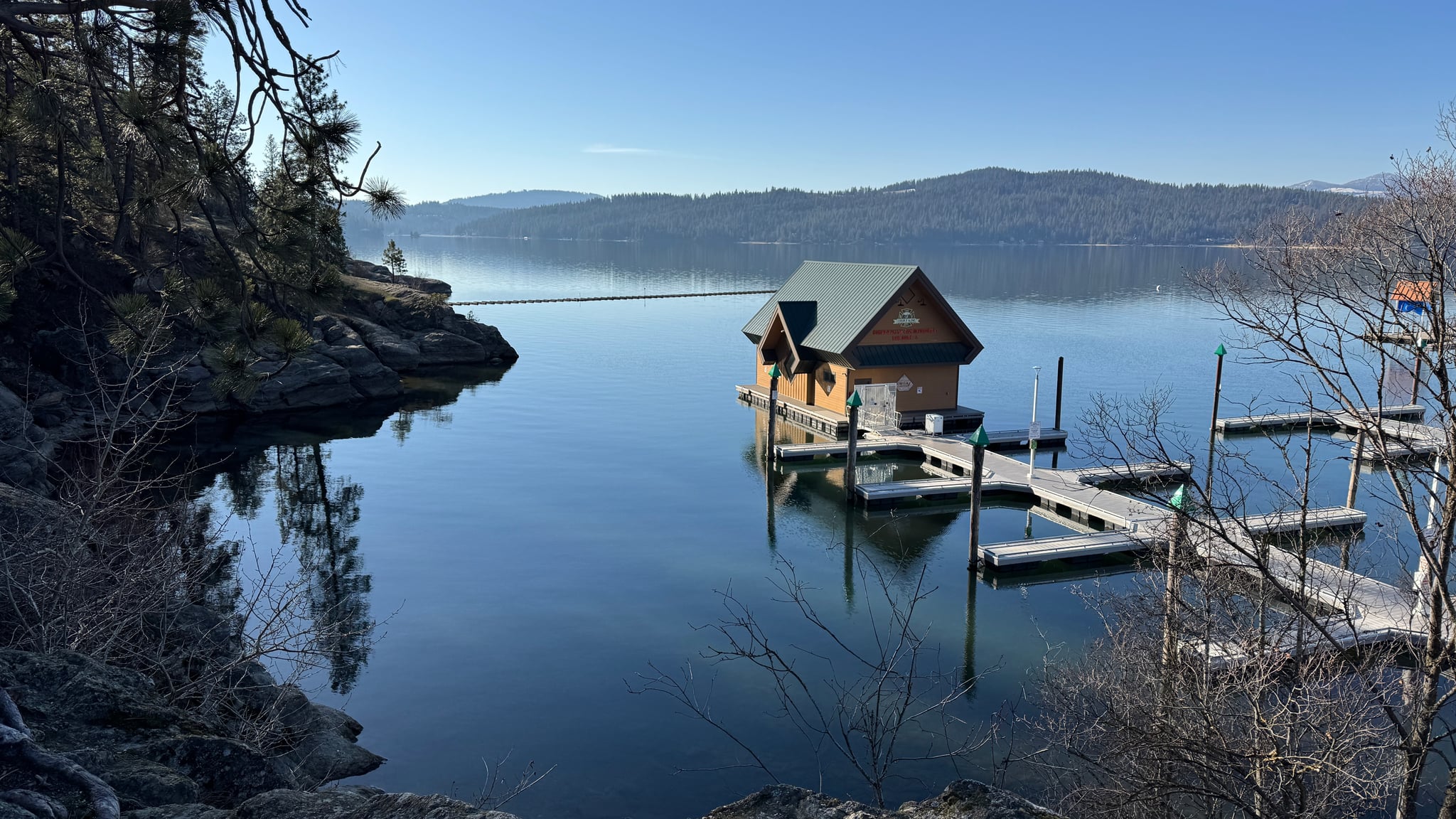
May brings consistent 60-to-70-degree days. The lake shifts from gray to that deep glacial blue that ends up on everyone's Instagram. The hillsides green up almost overnight. Tubbs Hill is lush and the wildflowers on Mineral Ridge are peaking. The Centennial Trail is packed with runners, cyclists, and families, and the downtown patios open up. Daft Badger, Vantage Point, The Porch — every restaurant with outdoor seating is suddenly the best seat in town.
June: When Summer Arrives and Doesn't Let Go
June is when summer officially arrives and doesn't let go. Highs push into the upper 70s and low 80s. The lake is warm enough for brave swimmers by mid-month (the rest of us wait until July). The days are extraordinarily long — sunrise before 5:30 AM, sunset after 9:00 PM. You get over 16 hours of usable daylight, and locals use every minute of it. This is when mountain biking at Canfield and Beacon Hill goes from "good" to "incredible." The trails are dry, the dirt is perfect, and you can get a quality ride in after work with hours of light to spare.
June is also when the Silver Mountain bike park opens for the season, and if you haven't done lift-served mountain biking at nearly 6,000 feet of elevation on trails that rival anything outside of Whistler, you're in for a revelation.
Moving to CDA in May or June: Peak Season Competition
This is peak moving season nationwide, and CDA is no exception. The real estate market is at its most active. You'll have the most inventory to choose from, but you'll also face the most competition — especially for properties with views, acreage, or lake access. Homes that are priced right and well-presented can move fast. Be prepared to act decisively if you find the right place.
The practical advantage of a May or June move is obvious: you get to experience the best version of CDA immediately. This matters psychologically. Unpacking boxes when it's 75 and sunny and the lake is ten minutes away is a fundamentally different experience than doing it in sleet. Your family will bond with the place faster, your kids will have the entire summer to explore and make friends, and you'll establish your outdoor routines before the rhythm of fall kicks in.
The Summer Arrival Tradeoff: Crowds and Costs
The downside: everyone else had the same idea. Moving companies book up. Rental prices peak. The tourist season is ramping up, which means the downtown and lakefront feel busier than they will the rest of the year. Don't judge the traffic or the crowds in June through August as representative — it's the seasonal peak.
July and August: Peak Everything
July and August in CDA are legitimately world-class.
What Peak Summer Feels Like in the Inland Northwest
Highs in the low-to-mid 80s, occasionally pushing into the 90s. Low humidity compared to anywhere east of the Rockies. The lake is perfect — warm enough to swim, big enough to never feel crowded if you know where to go. The beaches at Higgins Point, Arrow Point, and the public access at Sanders Beach are full but functional. If you've got a boat or a paddleboard, this is your season.
Summer Events and Outdoor Recreation at Its Peak
The outdoor calendar is stacked. Fourth of July is a major celebration — fireworks over the lake, the whole downtown turns out. Art on the Green at North Idaho College runs in August and draws artists and craftspeople from across the region. Live music shows up at various venues. The Ironman triathlon (if it's still running that year) brings athletes from around the world.
This is also when the mountain biking peaks. Silver Mountain's bike park is running full operations. Canfield and Beacon Hill are dialed. If you're willing to drive 45 minutes to an hour, the trail networks around Moscow Mountain, the Coeur d'Alene National Forest, and even the St. Joe River corridor open up options that most people never discover.
Wildfire Smoke in Coeur d'Alene: What You Need to Know
One honest caveat: wildfire smoke. Some years it barely registers. Other years — typically late July through August — smoke from regional fires settles into the valley and can drop air quality for days or even a couple weeks at a stretch. It doesn't happen every year with equal intensity, but it's a reality of living anywhere in the mountain West now.
Important context: it's almost never CDA that's on fire. The smoke is typically imported — blown in from large fires in Central Washington, Eastern Oregon, or British Columbia. It's a regional weather event more than a local hazard. The forests around CDA aren't the tinderbox that characterizes parts of California or Eastern Oregon. But when a big fire complex gets going a few hundred miles west or north and the wind patterns shift, the smoke settles into the valley like fog. Bend deals with it. Bozeman deals with it. Missoula deals with it. CDA is not immune. If you have respiratory sensitivities, this is worth factoring into your expectations.
Moving to CDA in July or August: Logistics and School Timing
Peak season for everything — prices, competition, activity. You'll be arriving alongside the tourism surge, which can make the area feel more crowded and expensive than it typically is. Rental inventory is thinnest, and short-term housing can be expensive if you need a bridge between closing on a home.
If you're targeting a fall school start, August works logistically — you can get settled, do the school registration, and have a couple weeks before classes begin. Just expect the move itself to be more expensive and logistically challenging than off-peak months.
September and October: The Local's Secret
If you asked most long-time CDA residents their favorite time of year, the answer would be September.
September: Why Residents Call It the Best Month in CDA
The tourists leave. The temperatures drop to that perfect 65-to-75-degree range. The lake is still swimmable into mid-September. The trails are empty. The mountain biking is arguably at its best — hero dirt, perfect temps, golden light filtering through the pines. Silver Mountain's bike park runs through much of September. And the larches — the western larches that turn gold in October — create a display in the surrounding mountains that rivals any New England fall foliage and almost nobody outside the region knows about it.
October: The Bittersweet Turn
October brings the first crisp mornings. Frost on the ground, 45-degree starts that warm to the mid-50s by afternoon. The farmers' markets wind down. The restaurant patios close one by one. There's a bittersweet quality to October here — you can feel the season turning, and there's a collective savoring of every warm day that's left. It's beautiful in a quieter, more personal way than the bombastic summer months.
Moving to CDA in Fall: The Under-the-Radar Strategic Window
This is the under-the-radar strategic window. The summer real estate frenzy has cooled. Sellers who listed in spring and didn't sell are adjusting their expectations and their prices. New listings still come on, but the buyer pool has thinned — families have already committed to their school-year plans, and the urgency of "getting in before summer" has passed.
You'll face less competition, have more room to negotiate, and still get to experience the tail end of CDA's best weather. The tradeoff is that your kids are entering school at the start of the year as the new student, and you've got less time to establish outdoor routines before winter arrives. But if you're not driven by the school calendar, September and October are arguably the most strategic months to relocate.
November and December: The Settling In
November is when winter announces itself.
November: When CDA Shifts Into Winter Mode
The first real cold front usually arrives in the second or third week — temperatures drop into the 30s and 40s during the day, the 20s at night. The first dusting of snow hits the mountains. Schweitzer and Silver start talking about opening dates. The rhythm of life shifts indoors.
But November in CDA has a specific charm. The town isn't quite in holiday mode yet, but it's settling into its winter personality. The restaurants get cozier. The fireplace at your local becomes the best seat in the house. If you're a hunter, November is prime time — whitetail season in North Idaho is the real deal.
December: The Holiday Season CDA Does Right
December is when CDA does something unexpected: it goes all-in on the holidays. The lighting ceremony the Friday after Thanksgiving is a legitimate community event — the downtown and the resort district light up, there's a parade, fireworks over the lake, and the holiday lights display along the lakefront runs through the new year. It's genuinely impressive, not in a commercial way, but in a "this town actually cares about this" way.
Moving to CDA in November or December: Quiet Market Advantage
The real estate market is at its sleepiest. You'll have the least inventory but also the least competition. Motivated sellers and winter-priced deals are available for buyers willing to house-hunt when nobody else is looking. Similar advantages to January and February — just with the added complexity of moving during the holidays.
If you can handle the logistics, a December move means you settle in during the quietest period, build your winter routines, and then experience the progressive revelation of each season as the year unfolds. You'll understand the place from the ground up rather than being seduced by summer first and blindsided by winter later.
So When Should You Actually Move to Coeur d'Alene?
There's no universally perfect month. It depends on your priorities.
Best Time to Move for Real Estate Deals
November through February. Less competition, more negotiating power, motivated sellers. You trade weather convenience for financial advantage.
Best Time to Move for Families With School-Age Kids
Late May through June (summer settling, September start) or late July through early August (tight but doable). April also works if you want to give kids a quarter to acclimate before summer break.
Best Time to Experience CDA at Its Peak
June through August. You'll fall in love immediately. Just know that winter is coming and it's different. Read our honest winter guide before you commit.
Best Overall Strategic Moving Window
September or April. Both offer the sweet spot of reasonable real estate conditions, manageable weather, enough seasonal beauty to feel confident in your decision, and runway to get established before the next seasonal shift.
The Honest Answer: Visit in the Season That Scares You
Visit first in a season that scares you. If you've only been here in summer, come in February. If you've only seen winter photos and you're nervous, come in September. The people who thrive here long-term are the ones who walked in with open eyes about all four seasons — not just the postcard version.
What We'd Tell Our Past Selves
We moved from Bend, Oregon after 15 years. We'd lived across the West — Austin, Mesa, Issaquah, and more — and explored places like Sedona, Prescott, and the White Mountains in depth before landing here. We've done this before, and we've learned that the timing of a move shapes the emotional arc of your first year more than almost any other factor.
Why We Moved in March — and Would Do It Again
We moved in March. And we'd do it again in a heartbeat.
Yes, March is muddy. Yes, the trees are bare and the lake is gray. But here's what that gave us: we arrived during CDA's least glamorous month, which meant zero illusions. We weren't seduced by a postcard summer — we walked in with clear eyes and immediately started building our routines. Found our coffee shop. Found our gym. Learned the grocery stores and the back roads. Got the house set up without the pressure of "we should be at the lake right now."
Building Into Summer: The Best Way to Fall in Love With CDA
And then the magic happened slowly. April warmed up and the trails started drying out. May exploded with green and wildflowers. By June we were riding Canfield after work in golden evening light, paddling the lake on weekends, and grilling on the deck until 9:30 PM. Every week was better than the last for four straight months. That building momentum — gray to green to gold to full summer glory — was the best possible way to fall in love with this place. We didn't peak on day one and spend the rest of the year adjusting downward. We built into it, and by the time our first winter arrived, we'd already decided this was home.
That's our honest recommendation: if you can handle arriving during the quiet season, the reward is experiencing every upward turn the INW has to offer. But that's us. If you need the summer reveal to feel confident in your decision, there's nothing wrong with a June move. The important thing is understanding what you're walking into regardless of when you arrive.
Four Real Seasons — That's the Point
The Inland Northwest has four real seasons. That's not a tourism tagline — it's the central fact of life here. Every season has trade-offs, every month has a personality, and the people who stay long-term are the ones who found something to love about each one.
We're here because this is the only place we've found that matches the natural beauty of Bend without the crowds, offers the connectivity of a metro area without the sprawl, and gives you four distinct seasons that each feel like a reason to be here rather than something to endure.
The best time to move to Coeur d'Alene is whenever you're ready to experience all of it.
Thinking about relocating to the Inland Northwest? INW Basecamp helps people navigate the real questions — not just where to live, but how to build a life here. We've done it ourselves, and we're building the resource we wish existed when we made the move. Get in touch and let's talk about your timeline.